Best Bottle Feeding: Comfort-First Inclusive Methods
7th Feb•5 min read
The baby bottle history we often overlook tells a story of survival, hygiene, and comfort, with each innovation born from a real problem caregivers faced. Understanding the evolution of baby feeding helps you see why today's bottles are designed the way they are, and more importantly, how to recognize the comfort cues that tell you whether a bottle works for your baby right now.
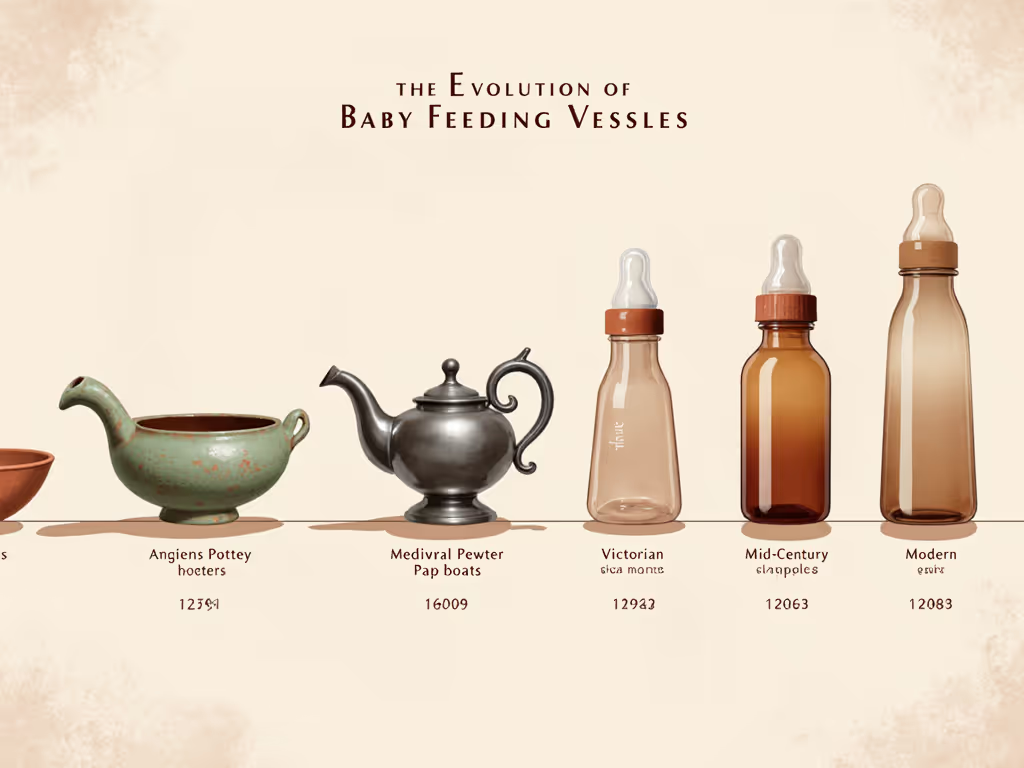
Thousands of years ago, caregivers used hollow cow horns with soft leather attached, terracotta vessels, and even animal-shaped ceramic bottles[1][7]. These ancient containers show something striking: caregivers have always sought ways to supplement breast milk or feed infants when nursing wasn't possible. Archaeological evidence reveals that by 1200 BCE, ceramic bottles were already being used to deliver animal milk to babies[1].
What's telling is the geometry. Early containers featured simple spouts or openings, not because they were optimal for a baby's mouth, but because they were what materials and knowledge allowed. The infant mortality rates were staggering, yet caregivers persisted, adapting what they had.
This history matters because it reminds us that feeding solutions emerge from necessity, not from marketing tiers or brand prestige.
A turning point arrived in the 16th century, when nursing containers actually began to be shaped like bottles, replacing pottery jugs and animal horns[3][4]. Doctors were developing artificial feeding techniques using animal milk, and designers experimented with materials (wood, pewter, glass, and felt) to create nipple-shaped pieces that could regulate flow and protect the baby's gums[4].
By the 18th century, manufacturers emphasized comfort, ergonomics, and cleanliness[4]. The flat-shaped bottle emerged, followed by the banana-shaped blown glass design, which allowed a baby to feed in an inclined position while the caregiver controlled flow by pressing their thumb over a hole[3]. These weren't innovations driven by market research; they were solutions to observable problems: babies who choked, caregivers who struggled with positioning, and the relentless threat of infection.
The 19th century brought mass production and a flood of patents. In 1841, the first glass nursing bottle was patented in the United States, intentionally shaped like a mother's breast[1]. The Alexandra Feeder arrived in England in 1845; the Biberon in Paris around 1851[1][6].
But some designs proved dangerous. The banjo bottle (shaped like the instrument) allowed babies to "feed themselves" using a rubber tube, marketed as innovative, yet notorious for poor hygiene[2]. Cleaning recommendations advised washing only every 2-3 weeks, earning it the grim nickname "Murder Bottle"[2]. Gastrointestinal infections from contaminated bottles killed many infants, a tragedy that spurred safer practices.
In 1894 and 1900, Allen and Hanbury introduced a banana-shaped bottle with a removable valve and teat, easier to clean and helping improve survival rates[1]. Similar designs proliferated and remained popular from the 1900s through the 1950s[1].
One of the most significant breakthroughs came from understanding a simple problem: babies swallowed too much air. See how modern designs tackle this in our anti-colic bottle comparison. During the 1940s, nurse Adda M. Allen filed multiple patents for bottle designs aimed at limiting air intake during feeding, reducing gastric upset and spit-up[1]. Her work led to disposable collapsible liners, tested at George Washington University Hospital and eventually marketed by Playtex[1].
The check valve in the nipple (a one-way mechanism controlling liquid flow) appeared as early as 1948[1]. This technology, refined by manufacturers like Owens-Illinois Glass, became standard in modern pressure-balancing bottles[1]. It's the same principle used in adult drinking cups and vacuum-dependent products today.
What's striking is that this innovation emerged from observation: caregivers and nurses watching babies cough, choke, or spit up and asking, "How do we slow this down? How do we prevent air from entering?"
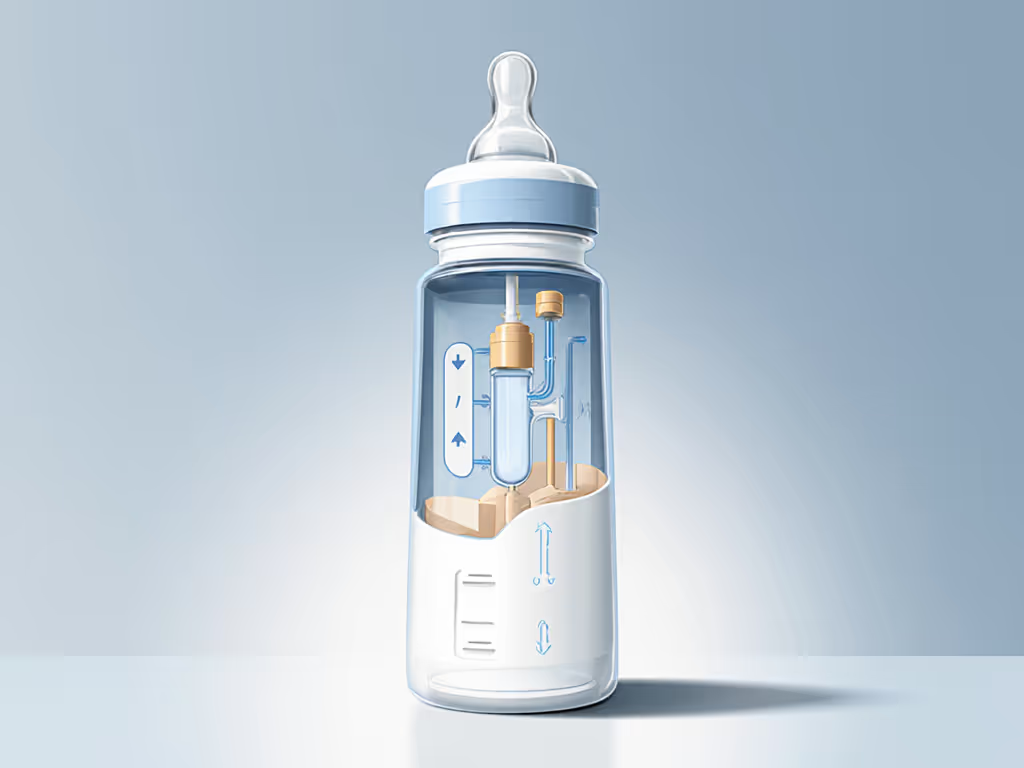
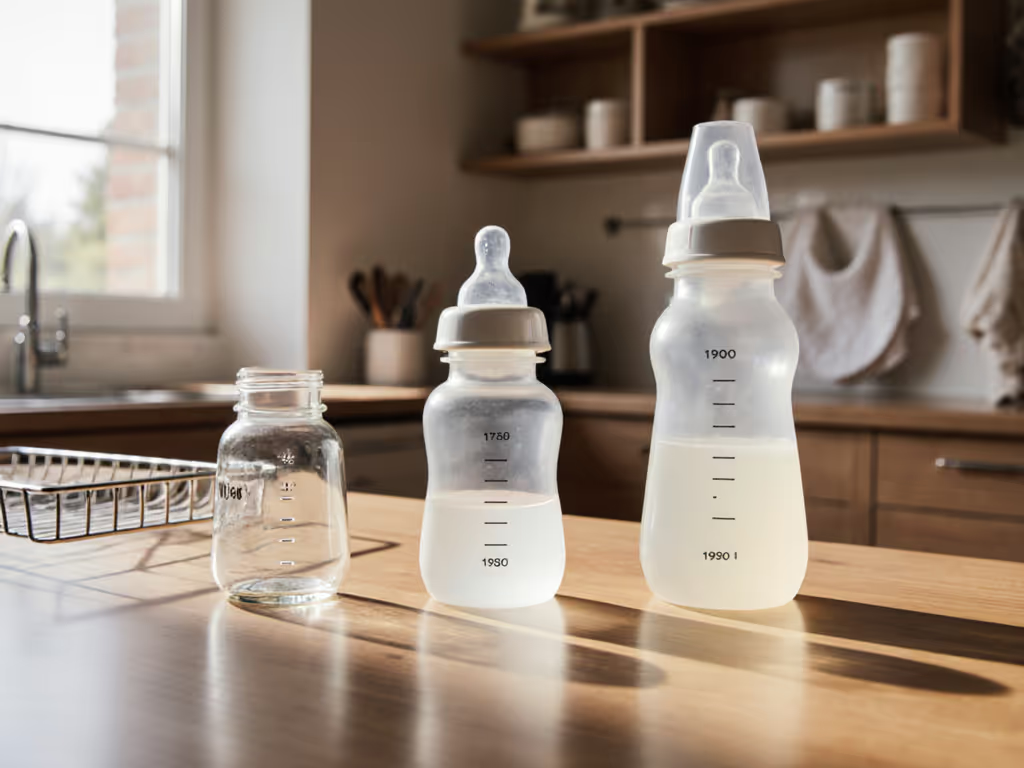
By the 1950s, upright Pyrex bottles with narrow necks dominated[1]. Then in the 1960s, wide-neck versions arrived in the UK market, a simple change with major implications[1]. Wide mouths meant easier cleaning, faster sterilization in batches, and less residue hidden in tight corners[1]. For step-by-step hygiene practices, follow our baby bottle cleaning and sterilization guide.
This detail matters more than it seems. A narrow neck is harder to clean thoroughly, raising the risk of mold and bacterial growth, a real pain point for caregivers managing multiple bottles across shifts. Wide necks solved a practical problem and became the baseline we still expect today.
The evolution from ceramic vessels to modern bottles reveals a pattern: comfort first, then compatibility; innovations arrived when caregivers observed discomfort, such as choking, air swallowing, difficult cleaning, or leaks, and demanded solutions. Marketing and brand names came later.
In my work supporting infants and caregivers, I've observed something that bottle history confirms: comfort cues predict acceptance better than labels or marketing tiers. I remember supporting two babies in a toddler room who were given identical bottles. One relaxed only when we widened the latch angle and slowed the flow; the other needed a narrower teat and faster pace. Neither decision came from the bottle's name or price. Both came from watching their shoulders drop, their swallowing slow, their eyes settle (observable signs of comfort).
Today's bottles inherit centuries of ergonomic thinking: venting systems inspired by pressure-balancing research, wider mouths for easier cleaning, softer silicone nipples closer to breast tissue, and flow rates born from understanding how babies actually suckle. For a component-by-component overview, see our baby bottle anatomy guide. But the most important innovation is invisible: the permission to trust what you observe.
Watch for comfort cues, not specifications.
Start with a single change. If your baby seems uncomfortable, adjust one variable (flow rate, latch angle, or positioning) rather than switching bottles entirely. Our lab-tested nipple flow rate guide helps you pick the right stage without guesswork. This teaches you what matters for your baby, not what marketing promises.
Clean and inspect thoroughly. Wide-neck bottles and simple designs reduce the hidden corners where mold hides. Look for residue in the valve seat or vent holes before each use. This is hygiene informed by history.
Ask caregivers across settings what they observe. Daycare staff, grandparents, and partners notice comfort cues during their shifts. Collect their observations the same way historical researchers collected feeding bottle designs: by watching what works, not by assuming.
The journey from cow horns to modern bottles is a journey of listening to what caregivers and babies actually need. That listening never stops. Your observations today are part of the same human effort to make feeding calmer, safer, and more comfortable.
Next Step: Over the next week, keep a simple feeding diary. Note one observation per feed, such as jaw tension, swallow rhythm, or how quickly your baby settles. Bring this to your pediatrician or IBCLC at your next check-in. Real comfort data, gathered from your own watching, is the most honest measure of whether a bottle is truly working.