Pump Bottle Compatibility: Adapter Testing
2nd May•10 min read

Bottle design and infant oral motor development are far more interconnected than most parents realize. The shape of a nipple, the flow rate it delivers, and how the bottle vents can measurably influence how your baby's mouth, jaw, and palate develop during the critical first months of life. This guide walks through what the research and caregiver data show, and what you can test at home.
Infant sucking is not a reflex alone; it's a learned motor skill. When babies feed, they're coordinating tongue peristalsis (wave-like contractions), jaw stability, and breathing, a process called suck-swallow-breathe coordination. The nipple shape and flow characteristics directly shape how hard a baby must work, how their tongue positions itself, and ultimately, the muscular patterns they encode.
Bottle nipples typically range in firmness and shape. For latch mechanics across bottle shapes, see our wide-neck vs standard latch comparison. Slower flows (measured in milliliters per minute, often 30-50 mL/min for preemie or "newborn" nipples) require more active tongue and jaw engagement. Faster flows (70-100+ mL/min) place less demand on oral muscles and can lead to a more passive sucking pattern. This distinction matters: research indicates that the sucking demands placed on infants during feeding influence palatal arch formation and tongue tone development.
Breastfeeding creates what's called a "tongue-to-palate seal," where the infant's tongue cups upward against the roof of the mouth. Bottle feeding, depending on nipple design, can train a different tongue posture. A nipple with a pronounced bulbous tip mimics the breast more closely and encourages an upward tongue cupping. A narrow, rigid nipple may allow the tongue to sit flatter or even poke forward between the gum line and nipple, a pattern sometimes called an anterior tongue thrust.
Over months, repeated anterior tongue thrusting can affect palatal development and has been linked (in observational studies, not causation) to higher rates of anterior open bite in childhood. Conversely, a well-designed bottle nipple that supports a neutral or upward tongue posture supports more typical oral arch development.
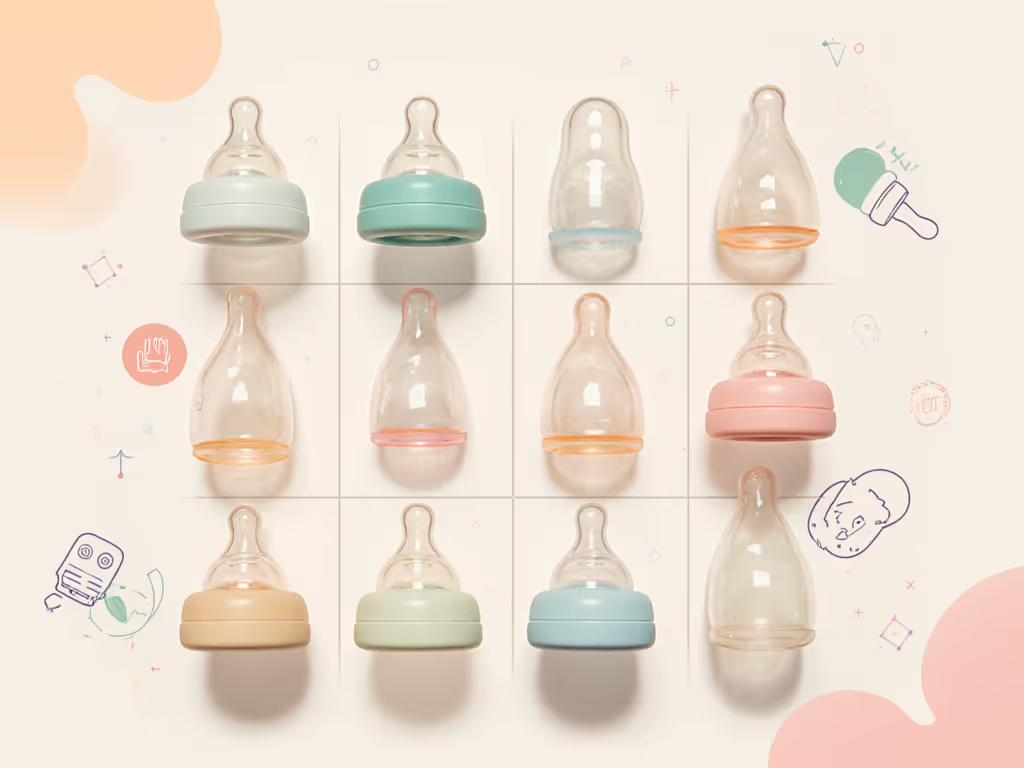
Nipple shapes fall into a few broad categories:
Material firmness also plays a role. Softer, more pliable silicone (typically softer than latex) collapses slightly during sucking, allowing more give-and-take in jaw movement. Firmer materials require stronger muscular effort. Neither is universally "better." The fit depends on your baby's sucking strength, prematurity status, and oral tone.
Flow rate, the volume of milk (or formula) delivered per suck or per minute, is one of the most measurable variables. Nipple flows are usually labeled ("newborn," "slow," "level 1," etc.), but these labels are not standardized across brands. Our lab-tested nipple flow rates show how "slow" varies by brand. Lab testing confirms that two "slow" nipples from different manufacturers can differ by 20-30% in actual flow.
Slower flows (30-50 mL/min median) require more active jaw and tongue work, engaging the muscles responsible for feeding and, by extension, speech articulation. Faster flows (80-100+ mL/min) reduce muscular demand and can lead to swallowing delays or inefficient oral motor patterns if the baby's strength doesn't match the flow. Over time, mismatched flow can result in:
Bottles with poor venting trap air, creating negative pressure that collapses the nipple mid-feed or forces the baby to suck harder to extract milk. Repeated collapse requires the baby to adjust jaw and tongue position to compensate, adding variability to each suck cycle. Well-vented bottles allow steady flow and consistent oral motor patterning. Learn how vents affect feeding in our complete venting guide.
Excessive air intake during feeding (swallowed air from a collapsing nipple or poor seal) is also linked to colic, reflux, and gas, discomfort that can interfere with the baby's willingness to practice the full suck-swallow-breathe cycle.
The term "nipple confusion" is contested in research. Some studies find it; others do not. What is clearer: feeding method consistency matters. Babies who alternate frequently between breast and bottle (and bottles of different nipple shapes, flows, and materials) show more variable oral motor patterns week-to-week.
Oral preference, the baby's learned, motor-level preference for a particular nipple, develops after roughly 2-3 weeks of repeated exposure. If a baby feeds from the same nipple shape and flow consistently, they adapt their sucking to that geometry. Switching to a markedly different shape or flow requires re-adaptation.
For parents combining breast and bottle: using a bottle nipple that mimics breast anatomy (wide base, soft, upward angle, slower flow in the newborn period) and keeping it consistent supports oral motor stability. Follow these breastfed bottle transition steps to keep patterns consistent. Once the baby is beyond 8-10 weeks and has strong coordinated sucking, variation is less disruptive.
During this window, bottle design leaves its deepest imprint. Nipple shape, flow, and venting establish the baby's baseline sucking motor pattern. A bottle that supports a neutral or upward tongue posture and delivers a flow matched to the baby's strength leads to more symmetric, efficient sucking. Choose a bottle and nipple and use it consistently for at least 2-3 weeks before switching.
By 4 months, most babies have their sucking pattern locked in. If you've been using a poorly vented bottle or a flow mismatch, the baby is now accustomed to compensatory movements (e.g., forward tongue thrust, jaw clenching). Switching bottles can improve outcomes, but re-patterning takes time. The upside: caregiver consistency (all caregivers using the same bottle/nipple setup) becomes less critical by this stage, though it still helps.
By 6 months, when solids are introduced, oral motor skills from bottle feeding directly inform the baby's readiness to munch, mash, and eventually chew. Babies who've practiced strong jaw closure and upward tongue cupping during bottle feeds transition to spoon-feeding and self-feeding more smoothly. Weak or anterior-thrust patterns can slow the transition.
When you're trying a new bottle or nipple, keep variables consistent:
During each test feed, note:
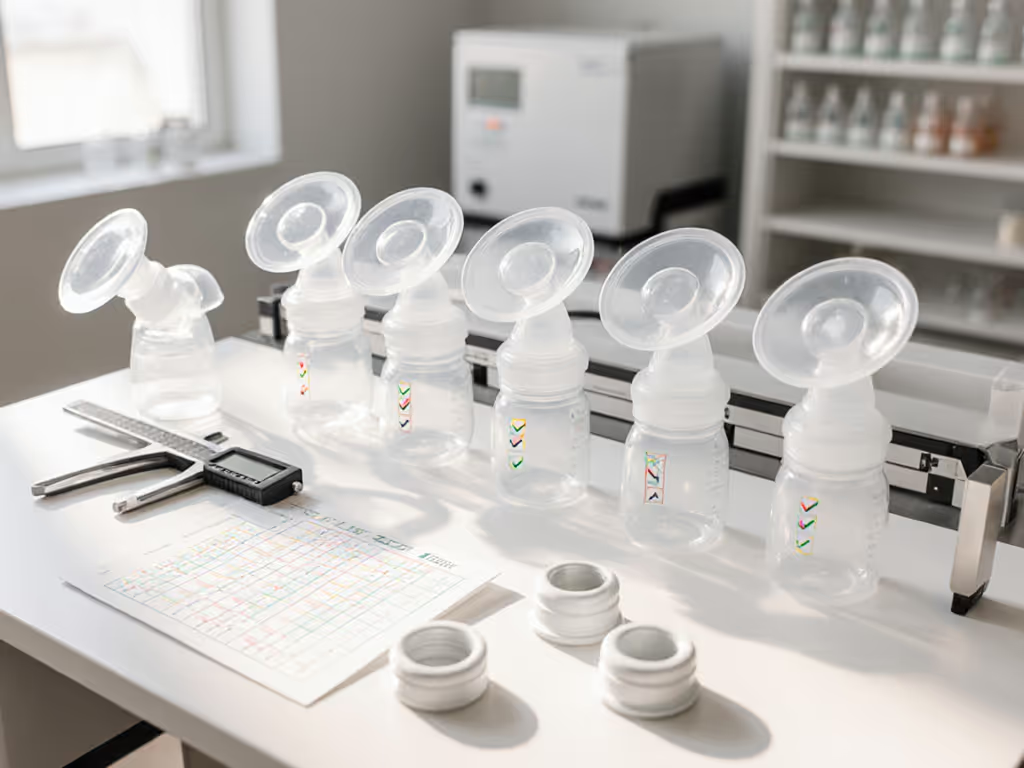
Before buying multiple bottles, confirm that your bottle choice is mechanically compatible with the pump(s) and sterilizers you own. Many families already have a breast pump; check whether the pump's flange threads directly onto common bottle types (Philips Avent, Medela standard, Spectra, etc.) or requires an adapter. Adapters work, but they add complexity and introduce potential leakage points.
Once compatibility is confirmed, test nipple flow and shape with your baby. A bottle that threads cleanly onto your pump but delivers the wrong flow for your baby is not a success.
Marketing labels ("slow," "stage 1") are not reliable predictors of actual flow rate. If you have a kitchen scale and a stopwatch, you can run a simple flow test: express 30 milliliters of formula or pumped milk into an empty bottle, time how long it takes for the nipple to drain (inverted, at a 90-degree angle), and calculate milliliters per minute. Repeat twice to confirm consistency. Ranges of 30-50 mL/min confirm a slow flow; 50-75 mL/min is medium; 75+ is fast.
This test takes 3 minutes per nipple and removes guesswork. Many parents skip it and buy multiple bottles based on reviews, only to find the flow doesn't match their baby's pace. Testing first saves money, clutter, and weeks of trial-and-error.
Oral motor development is influenced by multiple factors: genetics, prematurity, muscle tone, feeding frequency, and overall neurologic development. Bottle design is one modifiable variable, not the only one. A baby with low muscle tone or an undiagnosed oral tie may struggle with any bottle initially; an occupational therapist or lactation consultant can help differentiate design fit from underlying motor or structural issues.
Long-term outcomes (speech clarity, dental alignment) are multifactorial and depend on genetics, post-feeding oral development (thumb-sucking habits, tongue-tie status, pacifier use), and overall growth, not bottle choice alone. For the bigger picture, see the dental and speech development implications of bottle feeding. That said, choosing a bottle that supports neutral oral posture and matched flow removes one source of unnecessary variation.
Your choice of bottle nipple shape, flow rate, and design sets your baby's baseline feeding motor pattern. Within the first weeks, that choice shapes tongue and jaw patterning in ways that echo into solid food introduction and beyond. This doesn't mean perfection (most babies thrive regardless), but it does mean that a few minutes of intentional selection and testing early on can spare weeks of gas, reflux, feeding resistance, or re-patterning later.
State your test conditions up front. Confirm mechanical compatibility before buying. Test flow and fit before committing to a full set. Consistency across caregivers matters most in the first 3 months. And remember: compatibility, then performance: your existing pump and sterilizer should guide your bottle choice, not the other way around. Measured fit beats branding every time. That foundation pays dividends as your baby grows.